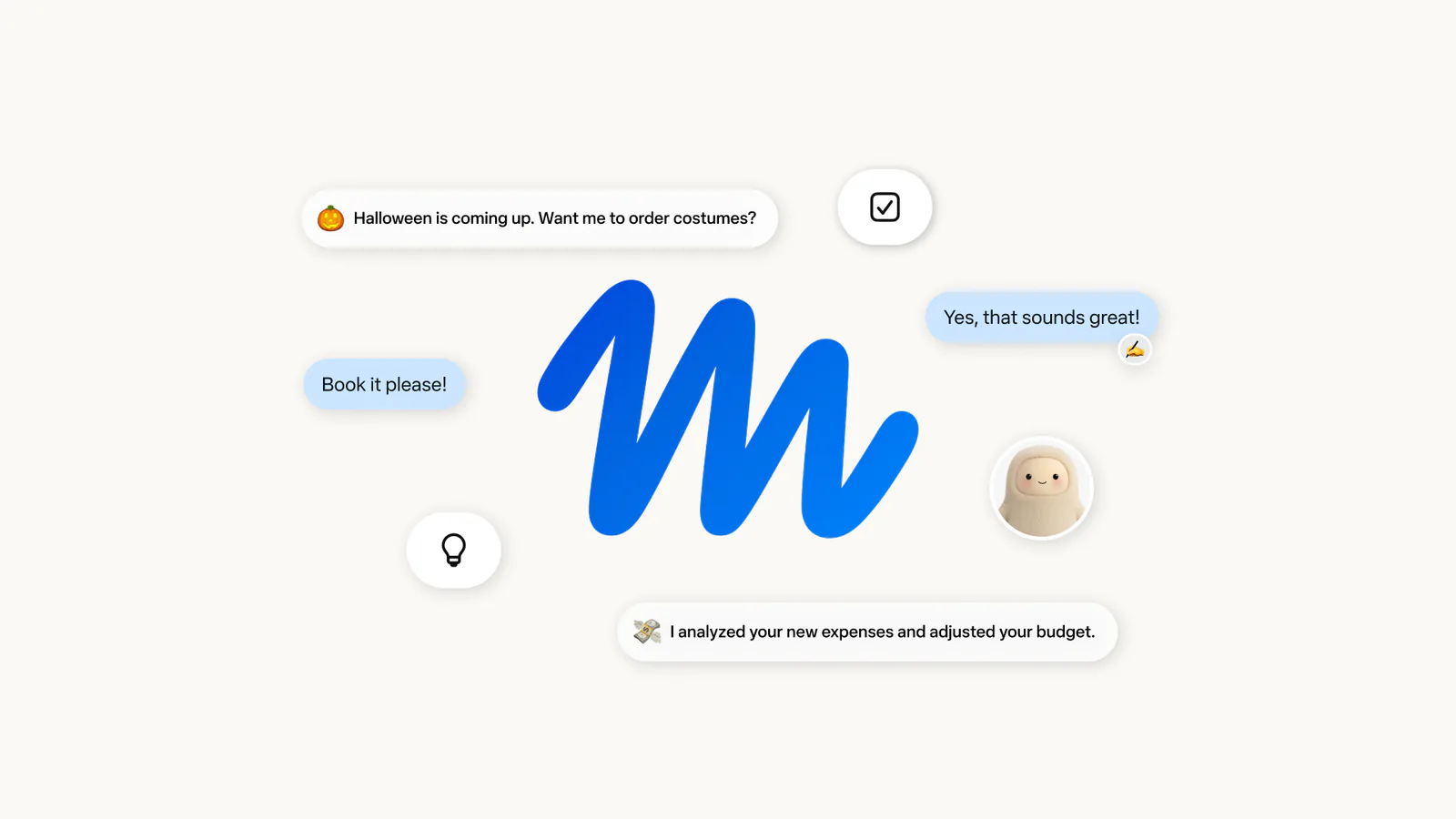
🤖 Meta Launches Muse: A Personal AI Agent That Does the Work
✨ Meta's first consumer agent moves past chat: it runs tasks in the background, inside its own secure computer.
🌐 Introduction
Meta today launched Muse, a personal AI agent for people in the United States. Unlike a chatbot that answers a question and stops, Muse takes on tasks and keeps working on them: sending emails, booking travel, filling out forms, building plans for long-term goals and completing purchases.
💡 "It doesn't just answer questions, it actually does the work."
— Meta, Introducing Muse
Muse is powered by Muse Spark 1.3, the latest version of the model family built by Meta Superintelligence Labs. It runs on a dedicated virtual machine with its own browser, so it can act across the websites and apps people already use.
📱 Availability at a Glance
| Detail | What Meta Announced |
|---|---|
| 🗓️ Launch | September 8, 2026 |
| 🇺🇸 Region | United States only at launch |
| 🔞 Eligibility | Adults 18 and older |
| 📲 Platforms | iOS, Android, the web at muse.ai, and WhatsApp |
| 🕶️ Coming next | Meta AI glasses, "in the coming months" |
| 🧠 Model | Muse Spark 1.3 |
Meta designed Muse around messaging. You talk to it the same way you would message a person, either in the Muse app or directly in a WhatsApp chat.
🎯 What Muse Can Do
Meta's launch materials list a set of everyday jobs that Muse can take off your plate:
- ✅ Send emails on your behalf, with your approval
- ✅ Book travel and fill out forms
- ✅ Turn long-term goals into action plans and follow up on them
- ✅ Convert saved content into action, for example turning a recipe saved on Instagram into a grocery list
- ✅ Open a browser and negotiate for you, for example to bring down a bill
- ✅ Check out using Link by Stripe, which comes with purchase protections. Shopify's Shop Pay is listed as coming soon
- ✅ Keep working after you close the app, and suggest ideas without being prompted
Muse also remembers your preferences, learns from your conversations, and is meant to get more useful over time.
Meta's launch video for Muse. Source: Meta Newsroom
🏗️ How It Works: A Computer of Its Own
The most interesting part of the launch for engineers is the architecture. Muse does its work on a dedicated, isolated machine that has its own browser.
Muse Execution Model:
- 🖥️ Muse Secure VM - A dedicated secure virtual machine with its own browser
- 🛡️ Sentinel - A separate agent on the same machine that has to approve the agent's internet requests
- 🔌 Connectors first, browser as fallback - Muse uses built-in connectors or public APIs where it can, and drives the browser when it can't
- 🔐 Muse Confidential VM (later) - Meta says a future version will use encryption that only the user controls
TechCrunch reports built-in connectors for email, calendars, payments, health and fitness, smart home, dining, shopping, music and events, with 1Password support also coming.
Muse planning a field trip, from Meta's How It Works demos. Source: Meta Newsroom
🔒 Privacy and Control
Meta clearly knows that trust is the main obstacle for an agent that can spend money and send mail in your name. The launch post lists these controls:
| Control | What It Means |
|---|---|
| 🔌 Choose your connections | You decide which apps Muse can reach and how much access each one gets |
| ✋ Approval gates | Muse asks before it sends an email or makes a purchase |
| 📜 Audit trail | A complete record of what the agent did |
| 🔑 No credential access | Muse can't see your passwords or payment methods directly |
| ⛔ Disconnect anytime | You can revoke a service whenever you like |
| 🎛️ Training opt-out | You can opt out of your data being used for training |
| 📢 Separate from ads | Meta says Muse conversations are not shared with its ad systems |
TechCrunch's launch-day coverage was skeptical. It points to Meta's earlier FTC privacy settlements and the Cambridge Analytica scandal, and asks whether consumers will hand an agent from this company their inbox and card.
💰 Pricing
| Plan | Price | What You Get |
|---|---|---|
| 🆓 Free | $0 | Muse with usage limits |
| ⚡ Power | $20/month | More usage |
| 🚀 Maximum | $100/month | The highest usage allowance |
TechCrunch reports that you need a payment card on file to start. Meta hasn't published the exact usage limits for each tier, so check them before you plan any heavy workloads.
🧬 The Model Underneath: Muse Spark
Meta introduced Muse Spark on April 8, 2026. It was the first model from Meta Superintelligence Labs and the start of the new Muse series. Muse Spark 1.3 followed on September 2, 2026, six days before this launch. Meta says it focuses on agentic and coding work, and reports about 20% fewer tool calls and about 25% fewer tokens than version 1.2.
Those efficiency gains matter for an always-on agent: fewer tool calls and tokens per task should mean lower cost and less waiting for each job.
💼 What It Means for Teams and Developers
For a software consultancy and its clients, Muse is a signal of where consumer expectations are heading. It isn't something to build on yet.
| Area | What to Do Now |
|---|---|
| 🔌 Be agent-reachable | Muse prefers connectors and public APIs and falls back to the browser. If your client's product has a clean, documented API, an agent can use it reliably. If it doesn't, the agent will scrape your UI |
| 🧾 Design for delegated actions | Agents will fill forms and check out for users. Clear form labels, predictable flows and solid confirmation steps make that safer |
| 🛡️ Copy the safety pattern | A separate approval agent (Sentinel), human sign-off before consequential actions, and a full audit trail make a sensible reference design for your own internal agents |
| 💳 Watch agentic payments | Checkout through Link by Stripe, with Shop Pay to follow, means e-commerce clients should test how their stores behave when an agent is the shopper |
| 📊 Budget for usage-based pricing | The tiers sell usage, not features. Expect the same model in B2B agent tools, and plan for variable cost |
Practical takeaway: Audit one high-traffic user journey, such as booking, signup or checkout, and ask whether an agent could complete it through an API instead of a browser. Wherever the answer is "no", your users' agents will be slower and less reliable there.
⚠️ Open Questions
What to Watch:
- 🤔 How reliable is it on long, multi-step tasks in real use?
- 🔒 Will the Sentinel and approval model hold up against prompt injection from the websites it browses?
- 🌍 When will it expand beyond the US and beyond adults?
- 💸 What are the real usage limits for each tier?
✨ Conclusion
Muse is Meta's bet that the next consumer interface is delegation, not conversation. Its sandboxed VM, separate approval agent and connector-first design are a serious answer to the obvious risks. Whether people will trust Meta with their inbox and their wallet is a separate question that the technology can't settle on its own.
💭 The question for every product team is shifting from "Can users find this?" to "Can an agent complete this?"
Tags: #AgenticAI #Meta #Muse #MuseSpark #AIAgents #MetaSuperintelligenceLabs
Sources:
- Introducing Muse: The World's First Personal AI Agent Built for Everyone (Meta Newsroom)
- Meta debuts its Muse AI agent. Will consumers trust it? (TechCrunch)
- Introducing Muse Spark: Meta's Most Powerful Model Yet (Meta Newsroom)
- Introducing Muse Spark 1.3 (Meta AI Research)
- Meta launches Muse personal AI agent in the US (TechNode Global)
Media credits:
- Hero image and videos — Meta Newsroom